Charging Market
EV charging in the US vs. Korea: what's different?
EVmode, headquartered in Madison Heights, Michigan, with an office in Irvine, California, and its affiliate EVmode Korea in Seoul supply chargers and the EVmode CSMS in both the US and Korea. The two markets have different power systems, standards and certifications, so the chargers differ too. Here are the main differences.
1. Power: 240V vs. 220V
US homes and businesses use 240V single-phase or 208V for Level 2 charging, and DC fast chargers typically take 480V three-phase power. In Korea, buildings use 220V single-phase and 380V three-phase. That’s why EVmode’s US Level 2 chargers are rated 11.5kW and 19.2kW, while Korean models are 7kW and 11kW.
2. Connectors: CCS1 and NACS
Both countries use SAE J1772 for AC charging and CCS1 (Combo 1) for DC fast charging. In the US, the NACS connector developed by Tesla has been standardized as SAE J3400, and many automakers are moving to NACS ports. If you’re installing new chargers in the US, check that they support both CCS1 and NACS. EVmode’s Level 3 chargers come with CCS1 + NACS options.
3. Certifications: UL/CSA vs. KC
In the US and Canada, chargers need UL or CSA safety listings and must meet FCC rules for electromagnetic compatibility; ENERGY STAR and NTEP are increasingly expected for commercial sites. Korea requires KC certification. EVmode’s US chargers carry UL 2594 or UL 2202 and CSA C22.2 listings; see each product’s spec table.
4. Payments: cards vs. membership
US drivers expect to pay on the spot with a credit card (tap, swipe or chip), an app or a QR code, and some states require contactless card payment on public chargers. In Korea, operator membership cards and app payments are common, with roaming between operators.
5. Where demand is
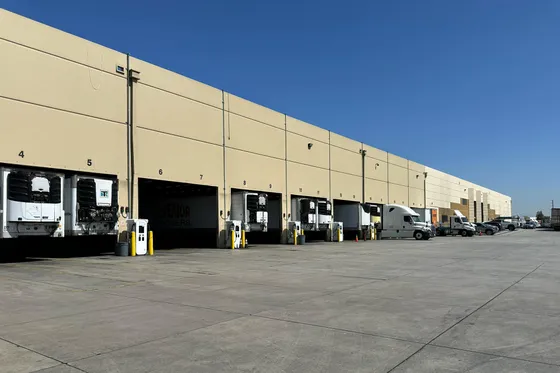
The US has more single-family homes with home charging, while demand grows fast at commercial sites, workplaces, multifamily properties and logistics and fleet depots. EVmode recently installed charging at logistics and retail sites in California. In Korea, most people live in apartments, so Level 2 charging in apartment parking garages is a large market.
Common ground: OCPP
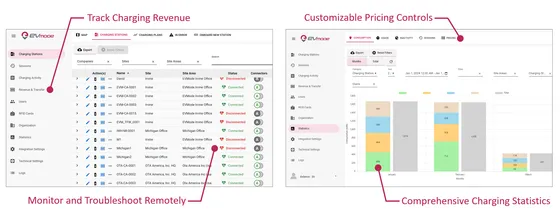
Both markets use OCPP, the open standard between chargers and management software. Chargers that support it keep working if you change platforms. The EVmode CSMS supports OCPP 1.6J and 2.0.1 and manages sites in both countries on one platform.
Not sure which charger fits your site? Request a quote below and our team will help.